April 20
5 moments across history
Louis Pasteur Completes the First Pasteurization Test
On April 20, 1862, French chemist Louis Pasteur and physiologist Claude Bernard successfully completed the first test of pasteurization. This groundbreaking process, which involves heating liquids to a specific temperature to kill harmful bacteria without altering the substance's properties, revolutionized food safety and public health. Pasteur's discovery laid the foundation for modern microbiology and led to the widespread preservation of milk, wine, and other perishable goods, saving countless lives by preventing foodborne illnesses.
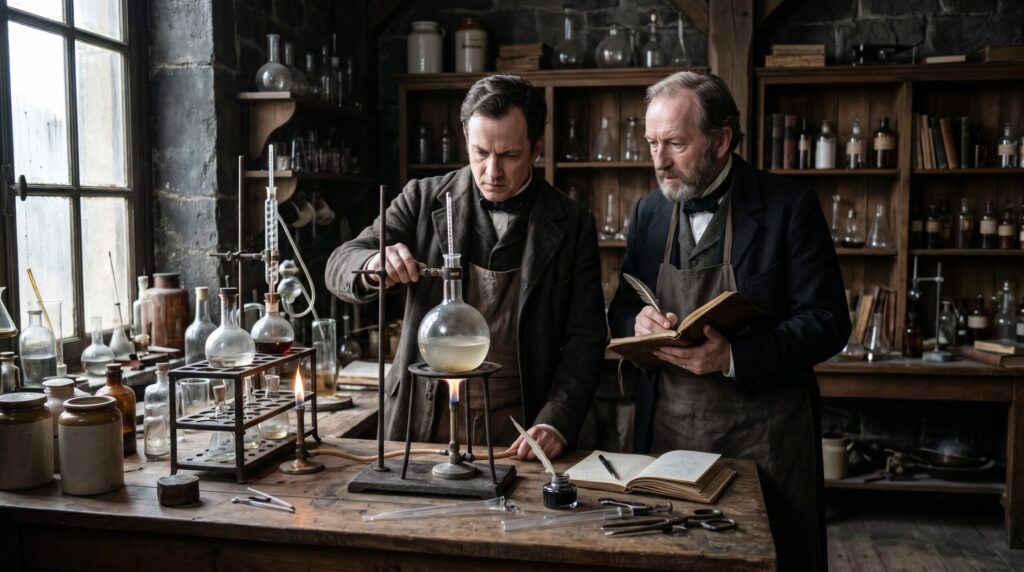
Louis Pasteur and Claude Bernard in their 19th-century laboratory during the first pasteurization test, April 20, 1862
Louis Pasteur Completes the First Pasteurization Test
Louis Pasteur and Claude Bernard in their 19th-century laboratory during the first pasteurization test, April 20, 1862

The complex array of glass flasks and scientific apparatus used by Pasteur in his pioneering research
On April 20, 1862, French chemist Louis Pasteur and physiologist Claude Bernard successfully completed the first test of pasteurization. This groundbreaking process, which involves heating liquids to a specific temperature to kill harmful bacteria without altering the substance's properties, revolutionized food safety and public health. Pasteur's discovery laid the foundation for modern microbiology and led to the widespread preservation of milk, wine, and other perishable goods, saving countless lives by preventing foodborne illnesses.
Marie and Pierre Curie Refine Radium Chloride

Marie and Pierre Curie in their dark, makeshift laboratory in Paris, 1902

A glass beaker containing refined radium chloride, emitting a faint, ethereal blue glow
On April 20, 1902, Marie and Pierre Curie successfully refined radium chloride from the mineral pitchblende in their Paris laboratory. This painstaking process allowed them to isolate the radioactive element radium for the first time, confirming its existence and properties. Their work fundamentally changed the understanding of atomic structure and earned them international acclaim, including the Nobel Prize. Radium's discovery opened new frontiers in medicine and physics, though the Curies themselves suffered from the long-term effects of radiation exposure.
The Red Baron Claims His Final Aerial Victories

Manfred von Richthofen's red Fokker triplane banking through a cloud layer in 1918
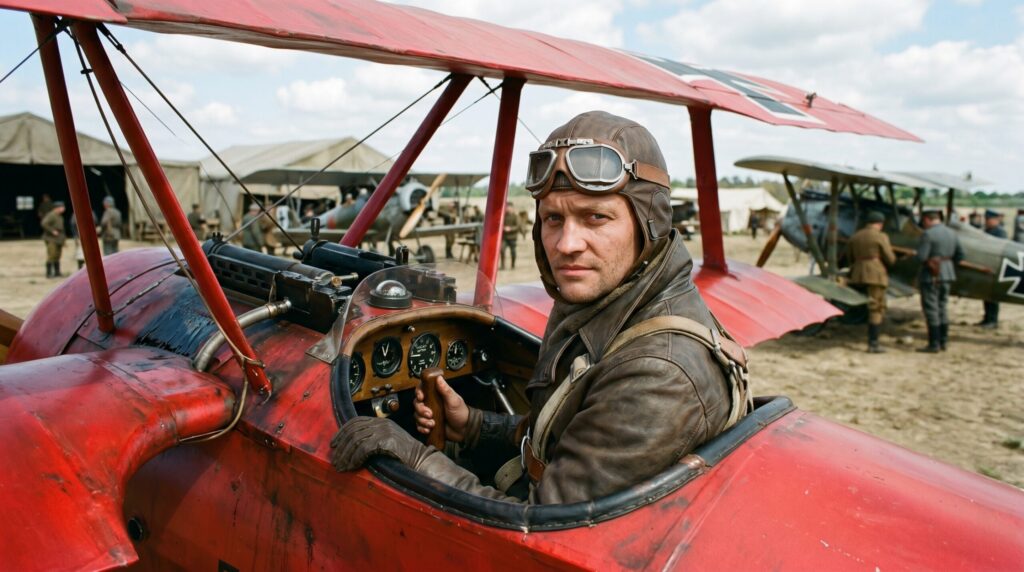
The Red Baron in the cockpit of his aircraft, shortly before his final mission
On April 20, 1918, Manfred von Richthofen, the legendary German flying ace known as the 'Red Baron,' achieved his 79th and 80th aerial victories over the Western Front. Flying his iconic red Fokker Dr.I triplane, Richthofen was the most successful fighter pilot of World War I, feared and respected by both sides. These would be his final victories; he was killed in action the following day. The Red Baron remains a symbol of the era's chivalry and the deadly evolution of aerial warfare.
The Deepwater Horizon Oil Rig Explosion

The Deepwater Horizon rig engulfed in flames and smoke in the Gulf of Mexico, April 20, 2010

A wide view of the catastrophic explosion reflecting off the ocean surface at night
On April 20, 2010, the Deepwater Horizon offshore drilling rig in the Gulf of Mexico exploded, killing 11 workers and triggering the largest marine oil spill in history. The explosion, caused by a well blowout, led to an uncontrolled leak that lasted for 87 days, releasing millions of barrels of crude oil into the ocean. The disaster had devastating environmental and economic impacts on the Gulf Coast region, highlighting the risks of deep-sea drilling and leading to significant changes in industry regulations and safety standards.
Edgar Allan Poe Publishes 'The Murders in the Rue Morgue'

A moody, gaslit Parisian street at night, evoking the mystery of Poe's Rue Morgue, 1841

A pensive, shadowed figure representing Poe's pioneering detective, C. Auguste Dupin
On April 20, 1841, Graham's Magazine published 'The Murders in the Rue Morgue' by Edgar Allan Poe, widely considered the first modern detective story. Introducing the character C. Auguste Dupin, Poe established the 'locked room' mystery trope and the concept of a brilliant detective using rational deduction to solve seemingly impossible crimes. The story transformed popular literature, influencing countless authors from Arthur Conan Doyle to Agatha Christie, and cementing Poe's legacy as a pioneer of the mystery genre.