
May 2
5 moments across history
The King James Bible Is Published
In 1611, the first authorized English translation of the Bible reached print in London, culminating a six-year project commissioned by King James I to unify religious factions within his kingdom. Forty-seven scholars divided into six companies worked across Westminster, Oxford, and Cambridge, meticulously refining earlier translations to produce a text that balanced theological accuracy with poetic majesty. This publication mattered profoundly because it supplanted the Geneva Bible as the standard for English worship, consolidating royal authority over the church while providing a common spiritual language for the populace. Its rhythmic prose and elevated diction subsequently permeated English literature and speech, influencing writers from John Milton to Abraham Lincoln and shaping the development of the modern English language itself. Centuries later, the King James Version remains one of the most printed books in history, standing as an enduring testament to the intersection of political ambition, scholarly diligence, and spiritual devotion.
The King James Bible Is Published
The King James Bible Is Published
The King James Bible Is Published

Year: 1611
In 1611, the first authorized English translation of the Bible reached print in London, culminating a six-year project commissioned by King James I to unify religious factions within his kingdom. Forty-seven scholars divided into six companies worked across Westminster, Oxford, and Cambridge, meticulously refining earlier translations to produce a text that balanced theological accuracy with poetic majesty. This publication mattered profoundly because it supplanted the Geneva Bible as the standard for English worship, consolidating royal authority over the church while providing a common spiritual language for the populace. Its rhythmic prose and elevated diction subsequently permeated English literature and speech, influencing writers from John Milton to Abraham Lincoln and shaping the development of the modern English language itself. Centuries later, the King James Version remains one of the most printed books in history, standing as an enduring testament to the intersection of political ambition, scholarly diligence, and spiritual devotion.
The ASPCA Is Founded
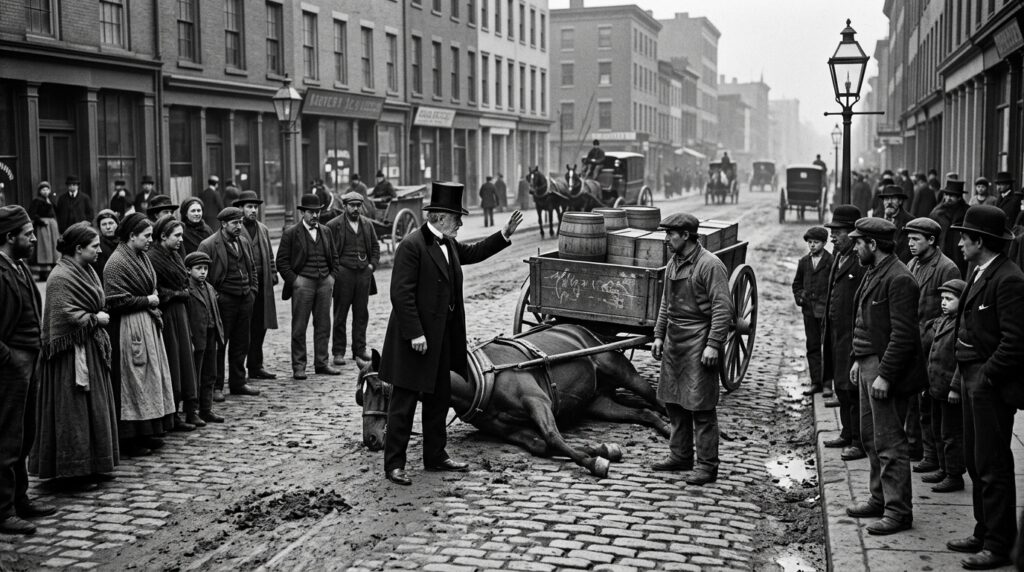
The ASPCA Is Founded

Year: 1866
Humanitarian Henry Bergh founded the American Society for the Prevention of Cruelty to Animals in New York City on May 2, 1866, establishing the first animal welfare organization in the Western Hemisphere. Bergh was motivated by witnessing widespread abuse of draft horses and livestock during his travels abroad, leading him to lobby for legal protections and enforceable anti-cruelty laws within the United States. This pioneering effort shifted public perception by asserting that animals deserved moral consideration and legal rights, challenging the prevailing view of them as mere property. The organization's creation sparked a nationwide movement that eventually led to the formation of similar societies across the country and fundamentally transformed legislation regarding animal treatment. Today, the ASPCA remains a powerful advocate for humane treatment, continuing Bergh's original mission to prevent suffering through rescue, legislation, and community programs.
Pasteur Tests the Rabies Vaccine

Pasteur Tests the Rabies Vaccine

Year: 1885
Amidst the bustling laboratories of Paris in 1885, French chemist and microbiologist Louis Pasteur achieved a monumental victory against disease by successfully testing his rabies vaccine on dogs. Building upon his germ theory, Pasteur attenuated the virus through drying techniques, proving that inoculation could induce immunity without causing the fatal illness known as hydrophobia. The stakes were incredibly high because rabies was a terrifying, invariably fatal diagnosis at the time, leaving victims with no hope once symptoms appeared. This success paved the way for the first human treatment later that year on Joseph Meister, establishing the foundation for modern immunology and preventive medicine. Ultimately, Pasteur's work transformed public health strategies globally, shifting medical focus from treatment to prevention and saving countless lives from viral infections.
Berlin Surrenders — WWII Ends in Europe
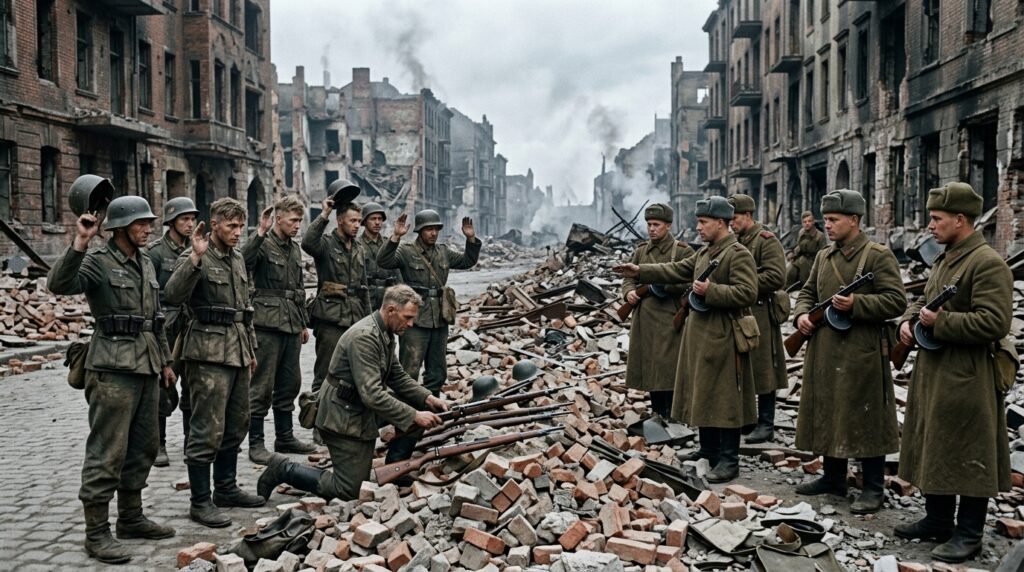
Berlin Surrenders — WWII Ends in Europe

Year: 1945
On May 2, 1945, General Helmuth Weidling formally surrendered the Berlin garrison to Soviet General Vasily Chuikov, effectively concluding the brutal Battle of Berlin. This capitulation came just two days after Adolf Hitler's suicide in his bunker and marked the cessation of organized resistance within the German capital against the advancing Red Army. The fall of the city shattered the heart of the Third Reich, removing the final symbolic stronghold of Nazi power and precipitating the unconditional surrender of all German forces shortly thereafter. While Victory in Europe Day would be officially celebrated on May 8, this specific surrender signaled the definitive end of combat operations in the European theater and paved the way for the Allied occupation. The division of Berlin following this battle ultimately became the physical embodiment of the Iron Curtain, setting the stage for the Cold War tensions that would define global politics for the next half-century.
Margaret Thatcher Becomes UK's First Female Prime Minister
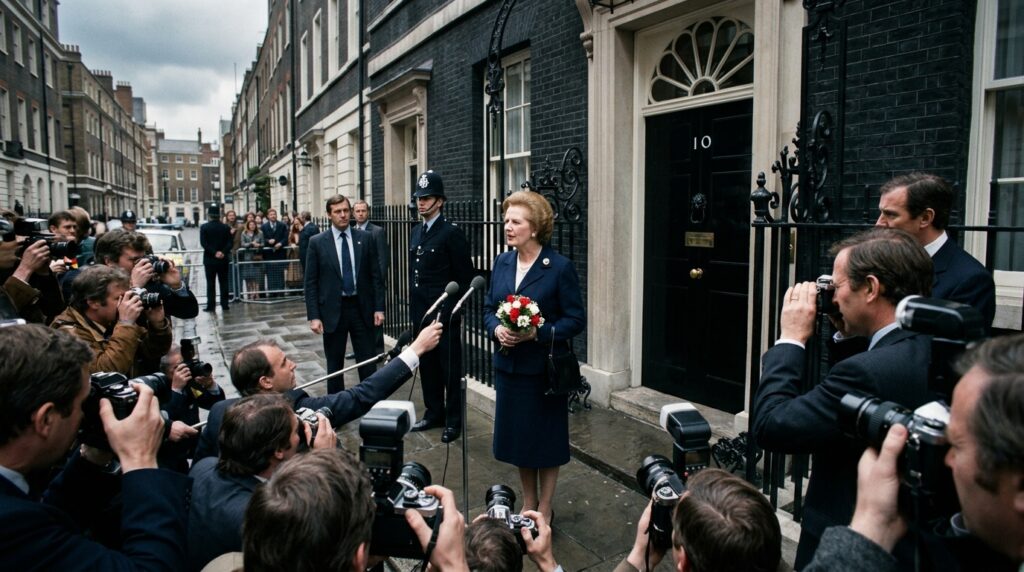
Margaret Thatcher Becomes UK's First Female PM

Year: 1979
Following the Conservative Party's decisive general election victory, Margaret Thatcher ascended to 10 Downing Street, shattering a centuries-old glass ceiling to become the United Kingdom's first female Prime Minister. Her arrival marked a profound shift in British politics, ending the Labour Party's tenure amidst the "Winter of Discontent" and signaling a decisive turn toward free-market economics and reduced state intervention. Thatcher's leadership style, characterized by unwavering conviction and neoliberal policies known as Thatcherism, challenged the post-war consensus and reshaped the nation's industrial landscape through privatization and union reform. This historic milestone not only redefined the role of women in global leadership but also entrenched a political legacy that continues to influence conservative ideology and economic policy across the Western world decades later. Her eleven-year tenure would ultimately transform Britain's social fabric, cementing her status as one of the most consequential and polarizing figures of the twentieth century.